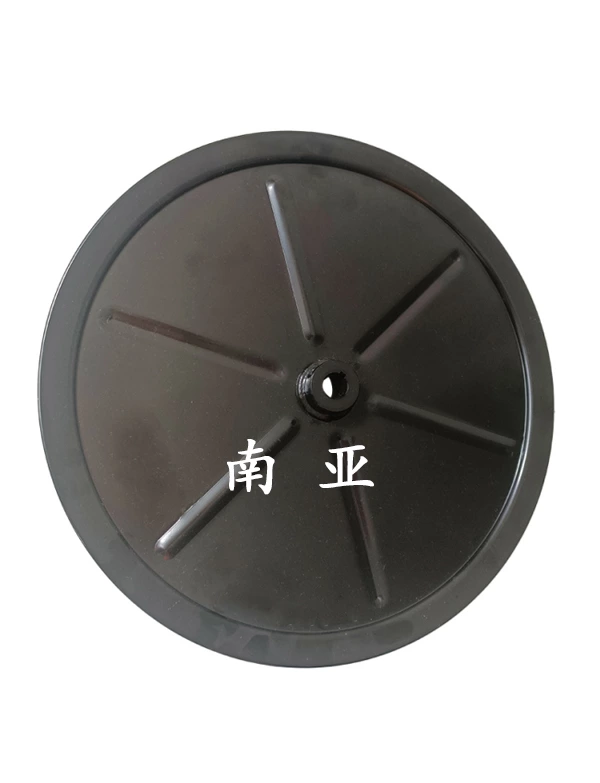
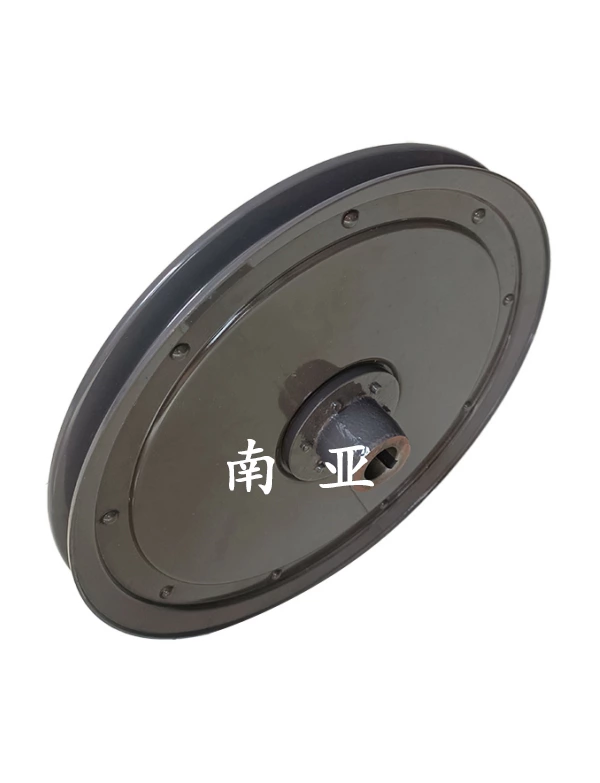
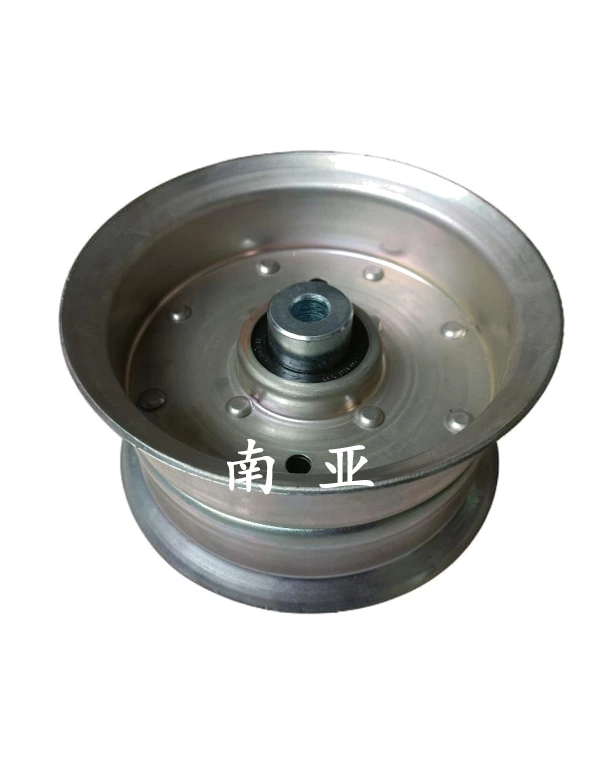
Heavy-Duty Machinery Synchronous Pulleys: A Mechanical Transmission Function That Cannot Be Overlooked
**The Evolution of Synchronous Pulleys**
Research into synchronous belt drives dates back as early as 1900, with numerous patents filed over the years; however, their practical application did not materialize until after World War II. Because the synchronous belt is a transmission component that combines the advantages of chains, gears, and V-belts, it gained significant attention alongside the industrial expansion following the war. It was first successfully developed in 1940 by the U.S.-based Uniroyal Rubber Company. In 1946, the Singer Company adopted synchronous belts for the synchronized drive mechanisms of sewing machine needles and bobbin winders, achieving remarkable results. This success led to their gradual adoption in various other mechanical transmission systems. Although the development and application of synchronous belt drives span a history of just over 60 years, they have already achieved rapid progress in every aspect.
**Composition of Synchronous Pulleys**
A synchronous pulley assembly consists of a gear-shaped pulley designed to engage with the mechanical teeth of a motor. These are commonly referred to as "timing pulleys," as they typically operate in conjunction with timing belts within motor systems. While synchronous pulleys vary widely in diameter and thickness, their defining characteristic—what truly sets them apart—is the presence of teeth along their circumferential traction surface. These teeth (or ridges) can be either coarse or fine, serving to firmly grip the synchronous belt and facilitate the precise, consistent transmission of high-speed power. So, how familiar are you with the synchronous pulleys currently in use today?
Timing belts—sometimes also referred to as "cam belts"—typically regulate the operational rhythm of an engine's valves. Although their specific functions may vary, other belts that incorporate a toothed profile into their design are also frequently categorized as timing belts. The timing function may apply to a mechanical camshaft or a water pump, as power is transmitted between gear systems and other mechanical components. Rubber belts are particularly well-suited for synchronous pulley systems; compared to rigid metal chains or gears, rubber belts offer greater flexibility and generate significantly less noise.
In principle, pulleys function by converting the rotational force generated by a motor or engine into linear pulling force. They come in a wide variety of shapes and sizes to accommodate diverse load requirements and operating speeds. Synchronous pulley mechanisms must be capable of performing reliably under extreme conditions; they must be engineered to be as robust as possible while remaining lightweight. In scenarios where standard pulleys can be paired to increase mechanical leverage, a stainless steel synchronous pulley mounted on a shaft can be coupled with a corresponding pulley, with a belt looped around both to complete the drive system. Timing pulleys are found wherever electric motors drive gears. Car engines, lawnmowers, and power tools all rely on these robust components. Typically manufactured from aluminum and nylon to ensure lightweight performance, they may also be composed of other materials such as plastics and polymers. These components are engineered to withstand heavy wear and tear, and are frequently treated to resist rust or oxidation. Furthermore, they must be capable of enduring high temperatures ranging from approximately 180°F (82°C) to 250°F (121°C).
The continuous development of new materials serves to make timing pulley assemblies even more durable and precise. Timing pulley designs must be capable of withstanding high torque loads. They utilize rugged, toothed timing belts that operate effectively across a wide range of tension levels. This adaptability allows them to accommodate varying tensile forces, thereby ensuring efficient horsepower delivery under load.
Applications of Timing Pulleys:
A timing pulley drive system consists of a closed-loop belt—featuring uniformly spaced teeth on its inner surface—and a corresponding pulley. During operation, the teeth of the belt engage with the grooves of the pulley to transmit motion and power. As a form of positive-engagement drive, this system combines the distinct characteristics of gear drives, chain drives, and flat-belt drives. Timing pulleys are widely utilized across numerous sectors, including automotive, textiles, printing and packaging equipment, sewing machinery, office automation, laser engraving systems, tobacco processing, financial equipment, stage lighting, telecommunications, food processing machinery, medical equipment, steel manufacturing machinery, petrochemicals, instrumentation, and various types of precision machine tools.